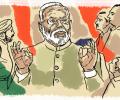
Kamal Nath argued that Modi had 'overexposed himself': By constantly pushing his own image on social media and on TV, attaching his name to multiple promises, Modi had become the face rivals could easily blame for India's chronic dysfunction.
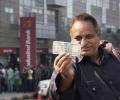
The sabre-rattling between parties on rival sides of the political divide over demonetisation showed no signs of softening on Saturday with the government accusing Congress of engaging in "fear mongering" and the latter hitting back calling the exercise a "not well thought out move" whose after-effects will last long.

Dozens of farmers have already committed suicide in India after damage from unseasonal rains this year.

While retail sales at dealerships have suffered the full impact of demonetisation, the growth in wholesale volumes comes as dealers had relatively lower inventory after Diwali in October.
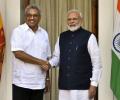
New Delhi is approaching Gota with an open mind, observes N Sathiya Moorthy.

The fragmentation of politics and the pressures of coalition management have contributed to a near-secular rise in budgetary social expenditures and spending on subsidies since 1991, leaving little fiscal space for government-led capital investment.

Available evidence suggests that we are on the way to a very costly failure of the current demonetisation scheme, says M R Narayana.

Nivedita Mookerji finds out how Paytm CEO Vijay Shekhar Sharma is handling his soaring popularity after the note ban as well as the criticism that comes as a package deal.

New campaigns rev up their marketing pitch, while new challengers such as Tata Motors with the Zest promise to put up a spirited fight

At the end of 2018-19, the Tata group had a consolidated debt of Rs 2.77 trillion. Tatas not only plan to avoid big-ticket acquisitions for now, the group's main focus will be on improving key metrics and reduce debt, say Shally Seth Mohile & Dev Chatterjee.
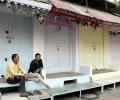
From farmers to cement, steel, logistics, transportation and automobiles, the back-end is struggling to get going due to the liquidity crisis.

India annually spends Rs 4.5 lakh crore on importing petroleum products, and Transport Minister Nitin Gadkari feels methane is a cost-effective import substitution. But is it? Pallava Bagla examines the pros and cons.

Parents always want to give the best to their children.

Miffed that Narendra Modi's presence has been limited in Varanasi city on Thursday, BJP leader Arun Jaitley slammed the returning officer for denying permission to the party's Bharat Vijay rallies and the Ganga aarti scheduled in the city.

'The focus is more on the outlook for global growth'.
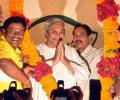
'In being dismissive of Naveen, his colleagues showed incredible naivety.' 'On the few occasions that he put his foot down, the overconfident party leaders, who believed they were using him and not the other way around, failed to read the signs of what was to come.'

A full-blown recovery remained elusive for India Inc in the July-September quarter, even as it overcame the challenge of achieving profitable growth.

Amid a slowdown in car sales, Maruti Suzuki India on Saturday said it will foray into the light commercial vehicles segment, 30 years after an initial plan was shelved when the company started operations.

With over 40 million active subscribers (as of March 2013), DTH has grown tenfold from just 4 million customers six years ago.

Many things could play spoilsport for the Indian economy.

The information technology sector, India's largest private-sector employer with 3.1 million direct jobs, will witness muted hiring activity this year.

LG, Panasonic: Making in and for India LG and Panasonic are looking to revive their fortunes in India by building local insights into their new products.

The people on the front lines of fighting the Ebola epidemic are Time Magazine's Person of the Year.
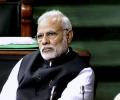
Demonetisation hit informal sector hard and caused job losses which was not addressed by the budget, Moily said.

'Markets should be driven more or less by earnings growth.'


The State is trying to curb the students movements, therefore, there are suspicions against some of the Subramanian report on education's recommendations, says Mohammad Sajjad.

As Rose Valley resurfaces, Sudip Bandyopadhyay and Tapas Pal's arrests marks the end of the bonhomie between the TMC and BJP.

'Let me talk about young Indian startups with their hearts in the right place and how they are proving that innovations that represent 'affordable excellence' -- breaking the myth that 'affordability' and 'excellence' cannot go together -- is indeed possible!' says Dr R A Mashelkar, the eminent scientist, in this fascinating feature.


The Alams saw the magical spot while on a drive to the hills. A few years later they set up home and a small hand woven shawl business, hiring local weavers, using local wool and natural colours made of root, stem and flower.

The policy statement by the RBI governor is also expected to be upbeat.
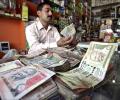
How will the government's decision to demonetise Rs 500 and Rs 1,000 notes help curb the creation and flow of black money into the Indian economy?

The industry players couldn't hide their disappointment.

Think organic food, affordable homes, artificial intelligence, suggests Prof Manmeet Barve.
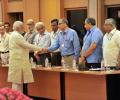
From Swachh Bharat to spearheading the Make in India campaign, the PMO seems to be at the centre of all policies, writes Nivedita Mookerji.

After 3 weeks of consecutive rally, this week was a breather for the index, which corrected by almost 1.5%.

Bharatiya Janata Party prime ministerial candidate Narendra Modi sharpened his attack on Nitish Kumar, saying the Janata Dal-United leader's "arrogance" and "ambition" to become prime minister drove him to split from BJP, and compared the socio-economic conditions of Muslims in Gujarat and Bihar to claim he practised "true" secularism.
The local labour force is streaming out of the region, creating a vacuum that makes it easier for the Bangladeshis to fill in, says R N Ravi
